|
|
 |
| |
 |
The Blue Book Project:
Why Are So Many Bankable Clients Unbanked?
-- The Blue Book Project on Building Inclusive
Financial Sectors |
|
Everyone agrees that a well-functioning financial
sector is the foundation for individuals to better
contribute to their country’s economic
activity. Still, the vast majority of people
do not yet have access to sound financial sectors.
In many countries the financial infrastructure
is designed to reach only a fraction of the wealthiest
population.
What is the Blue Book?
The Blue Book is a project of innovative
consultations carried of globally, to address
the challenges to building inclusive financial
sectors and tap into the opportunities to stimulate
their development. An inclusive financial sector
offers to the vast majority of the population
sustainable access to a range of financial services
suited to their needs.
UNCDF, with the Financing for Development Office,
will lead a process to identify key constraints
and opportunities for the promotion of inclusive
financial sectors, guided by a multilateral steering
committee comprising the World Bank, the IMF,
the ILO and IFAD. This project is based on the
commitment of Secretary General Kofi Annan to
the goal of “addressing the constraints
that exclude people from full participation in
the financial sector” in order to “build
inclusive financial sectors that help people
improve their lives,” and the global commitment
to collective
action following the 2002 International Conference
on Financing for Development in Monterrey.
The results of extensive international dialogue
will lead to the preparation and dissemination
of a "Blue Book on Building Inclusive Financial
Sectors" in mid-2005, outlining the obstacles
that countries face so that concrete actions
may be taken to position microfinance as an integral
part of a country's financial system.
The Blue Book will not be a negotiated "consensus" document,
but rather a compelling compilation of the experiences
of microfinance constituencies worldwide in the
effort to develop inclusive finance sectors.
Its call to action: a reference point for governments
to collectively discuss strategies, share and
improve best practices.
|
| |
|
| How
will the Blue Book be developed? |
|
The Year is a unique opportunity to address the
constraints to equitable access to financial
services, by bringing together: the financial
institutions, national governments, central banks
and supervisory bodies, multilateral institutions,
civil society, and the private sector. The series
of dialogues will focus on a set of issues under
the central theme of why so many “bankable” people
still do not have access to good financial services.
The consultations will take place from October
2004 and continue to culminate in a Global Meeting
in New York in May 2005.
Throughout the process, contributions will be
coordinated by the Secretariat of the Year in
international and regional policy forums on these
issues.
To learn more about the Blue Book project, please
visit their web site at http://www.uncdf.org/bluebook.
For more information on the Blue Book project,
please contact Kathryn Imboden at kathryn.imboden@undp.org.
back to top
|
| |
|
| |
|
The Global Microentrepreneurship
Awards: Celebrating Entrepreneurship Around the
World |
|
What is the Global Microentrepreneurship
Awards (GMA) Programme?
The GMA Programme recognizes the global contribution
microentrepreneurs make to their families and
to their communities. By emphasizing innovative
poor people, the GMA Programme raises awareness
and understanding while helping shed light on
the question of why so few poor people have access
to financial services.
The 2004 GMA awards were held in 8 countries:
Afghanistan, Cambodia, Dominican Republic, Indonesia,
Mexico, Mozambqiue, Pakistan and Rwanda, as well
as a local contest held in New York City. Winners
received monetary prizes and awards and had the
opportunity to open 17 stock exchanges throughout
the world as a reminder of their contribution
to the world economy. Meet
the winners of the 2004 contest!
What is new about the 2005 GMA Programme?
The 2005 GMA Programme has expanded
to 31 countries worldwide. In the 2004 GMA Programme,
111 microfinance institutions submitted 574 contestant
applications. Now we seek participation from
at least 700 Microfinance Institutions and anticipate
that over 3,000 contestant applications will
be submitted. The growth of the Programme in
such a short time frame proves that, regardless
of geographic location or financial status, when
given an opportunity, all microentrepreneurs
can create successful and sustainable enterprises.
To learn more about the 2005 GMA Programme click
here.
How does the GMA Programme contribute
to the International Year of Microcredit?
The GMA Programme places microentrepreneurs on
center stage and illustrates how microfinance
empowers the entrepreneurial spirit that exists
in impoverished communities worldwide. The Programme
bolsters investment and increases the visibility
of microfinance to donors, national governments,
and private sector businesses, thus helping build
more inclusive financial sectors and contributing
to the achievement of the Millennium
Development Goals.
Who is involved in the Global Microentrepreneurship
Awards Project?
The 2005 GMA Programme is being spearheaded by
a Steering Committee comprised of the United
Nations Capital Development Fund, the Citigroup
Foundation, and students from universities worldwide
who are members of the Microentrepreneurship
Student Alliance. But in order to really make
the 2005 GMA Programme an even greater success,
we are looking to microfinance institutions,
NGO's, governments, and private businesses to
become actively involved.
To learn more about who is involved in the 2005
GMA Programme click
here.
How can I get involved?
One goal of the GMA Programme is to create the
next generation of microfinance networks
and partnerships, comprised of public, private,
and nonprofit organizations, students, practitioners,
and community groups. We are actively seeking
to recruit additional volunteer groups and
individuals to participate in the GMA Programme
and encourage those interested to contact
us.
To learn more about how you can get involved in
the 2005 GMA Programme click
here.
Is it possible to purchase merchandise
made by a microentrepreneur?
In an effort to promote products manufactured
by microentrepreneurs we created "Made
by Microentrepreneur". Made by Microentrepreneur
is an online marketplace that offers the wares
of entrepreneurs from various regions of the
world with each artisan's product telling a distinct
story of how microcredit has enriched their lives.
When will the Global Microentrepreneurship
Awards take place?
The 2005 GMA Programme is currently being organized
at the country level. In November 2005 each participating
country will have their own Awards Ceremony that
will showcase the accomplishments of winning
contestants. Highlighting the Awards Ceremony,
we aim to have winning contestants 'ring' the
opening bells of local stock exchanges throughout
the world.
To learn more about the timeline of events for
the 2005 GMA Programme click
here.
For additional information on specific events
occurring in each of the participating countries
or to learn more about how you can get involved,
please visit www.gmaprogramme.org or
contact: Carola Saba, UNCDF Associate Programme
Manager - Carola.Saba@undp.org
back to top
|
| |
| |
|
|
Public Service
Announcements |
| |
|
| |
Michael Douglas |
| |
quicktime / windows
media player (English) |
| |
|
| |
Anggun |
| |
quicktime / windows
media player (English) |
| |
quicktime / windows
media player (French) |
| |
quicktime / windows
media player (Indonesian) |
| |
|
| |
Karina |
| |
quicktime / windows
media player (English) |
| |
quicktime / windows
media player (Spanish) |
| |
|
| |
Aishwarya Rai |
| |
quicktime / windows
media player (English) |
| |
quicktime / windows
media player (Hindi) |
| |
|
| |
Souad Massi |
| |
quicktime / windows
media player (French) |
| |
quicktime / windows
media player (Arabic) |
| |
|
| back
to top |
| |
| |
|
|
National Committees |
| An unprecedented
global response to the call for building inclusive
financial sectors is now underway, through the establishment
of National Committees. Member states were requested
to establish national coordinating committees to
facilitate activities and to create a dialogue on
best practices for building inclusive financial sectors
in their country. Each National Committee assesses
the challenges that poor people confront in accessing
financial services and decides upon activities and
initiatives to address these issues. Key factors
that are stressed throughout this process include
membership diversity and partnership, creativity,
effectiveness in communication and outreach, the
level of governmental support, private sector engagement,
and increased public awareness.
To date over 90 countries in all levels of development
have pledged their support to the International
Year of Microcredit. National Committees or Focal
Points had been established for 46 countries,
comprising high-level representatives from 35
governments, 60 United Nations local offices,
41 multinational agencies, 177 microfinance networks,
13 central banks as well as key members of the
private sector and civil society.
In each country the National Committee has a high
degree of flexibility with the activities and
events that are coordinated. Already hundreds
of conferences and seminars have been planned
throughout the Year and 27 countries have even
developed a formal public awareness campaign
to reach even the remotest region. Such awareness
raising activities focus on introducing quality
financial services to the poor and lower income
people and are designed to reach a wide-ranging
audience. Many governments realizing the benefits
of microfinance have initiated innovative ideas
at promoting the Year.
|
| |
| back
to top |
| |
| |
|
The Data Project:
What Type of Access Do Poor and Low Income People
Have to Financial Services?
The Data Project: What We Know and What We
Need to Know |
|
What is the Data Project?
The data project will bring together
a small group of expert statisticians and researchers
to address current data gaps, anticipate future
needs, and build agreement on the best way forward
for governments, private sector and multilaterals
to gather concrete data on the access to microfinance.
How does the Data Project contribute to
the goals of the Year of Microcredit?
Although there is a broad consensus
that microfinance is widely and increasingly
used, there is little hard data about who provides
it, in what form it is provided, who receives
it and at what cost. Hard data, by itself, will
help develop financial markets and would aid
governments, donors, banks, and the media in
identifying where to broaden and improve financial
access for all people. The breadth and scope
of microfinance makes collecting this information
a difficult task - one that will require the
combined efforts of governments, private financial
institutions, consultancies, and the major international
public financial institutions. Although some
research efforts have been attempted, none are
comprehensive and all would benefit from pooling
resources.
Who is involved in the Data Project?
Headed by Mr. Stanley Fischer, Governor,
Bank of Israel, the United Nations, World Bank
and IMF will bring together a team of expert
statisticians and researchers, their institutions,
as well as from governments and private sector.
This team will collaborate on developing the
methodology for the survey research, which will
be moving forward in full gear after the launch
of the Year of Microcredit in November 2004.
How will the Data Project be developed?
The data project will begin by examining
the rich anecdotal information, and already available
and institutional data looking at the gaps. The
next step will be to debate, devise and delineate
methodologies in pilot countries. A keystone
to this data will be its value to governments,
financial sector supervisors and private sector.
When will the results of Data Project
be published?
The goal will be to have a rich set
of hard data on pilot countries by the fall of
2005.
For more information, please contact Christina
Barrineau at christina.barrineau@undp.org.
Click
here for the latest on this project including
related papers and information on the October
workshop.
back to top
|
| |
|
| |
|
Student Networks:
Student Contributions to the Year of Microcredit |
|
What is the Student Network?
A network of Year of Microcredit Student
Ambassadors from graduate schools all over the
world are working to educate their respective
institutions through the planning of events,
special projects and symposia. As universities
are not isolated from global events, this network
will maximize outreach to the next generation
of microfinance practitioners and development
specialists.
How does the Student Network contribute
to the goals of the Year of Microcredit?
The Student Network will maximize outreach
to the next generation of microfinance practitioners
and development specialists.
Who is involved in the Student Network?
The number of schools participating
in the Student Network is constantly increasing.
As students, student organizations, and faculty
throughout the world learn about the tremendous
opportunity that is at hand to make a positive
contribution to the Year, and to their community,
the Network will continue to flourish. The strong
linkages that are created through the Student
Network ensure that their efforts will continue
long after the Year has come to a close.
Some of the schools and universities that are
active members of the Student Network include:
Harvard University —
Harvard Business School
John F. Kennedy School of Government
New York University —
Robert F. Wagner Graduate School of Public Service
Stern School of Business
Universidad Central — Chile
Columbia University —
Columbia Business School
Columbia School of International and Public Affairs
(SIPA)
Cornell University
Yale University —
Yale School of Management
Universidad de Chile
University of Pennsylvania —
Wharton School of Business
Northwestern University —
Kellogg School of Management
University of Virginia —
Darden Graduate School of Business
The Cambridge Microfinance and Development
Venture Capital (MADVC) Network —
www.microfinancenetwork.org
How is the Student Network developed?
The Student Network is always looking
to include additional schools and universities
from all parts of the world. Students and student
organizations interested in becoming a part of
the Student Network often begin by starting a
microfinance oriented club or student group.
The UNCDF has a great information packet that
describes how to develop and engage students
to become active in such a group and is available
by contacting info@yearofmicrocredit.org.
To learn how your university can become part of
the Student Network please contact Christina
Barrineau at Christina.barrineau@undp.org for
more information.
back to top
|
| |
| |
|
The
Launch of the Year: November 18, 2004 officially
launched the International Year of Microcredit
2005. |
|
To launch the Year of Microcredit, an effort was
undertaken by Harvard
University Business School students to organize
microentrepreneur awards and winning microfinance
clients rang the "opening bells" of
stock exchanges around the world.
Countries around the world also observed this
groundbreaking day and Year with diverse activities
and programs ranging from theater to panels on
the future of microfinance to documentary films.
After a kick off gala on the night of the 17th
in New York, the official launch day at United
Nations Headquarters began with a special performance
by the UN International School children's choir
with world-renowned musicians Anggun and Souad
Massi.
Then the lights went down for a video
message from Secretary General Kofi Annan.
He urged those observing the Year to recognize
that poor people should be viewed as part
of the solution to development and not part
of the problem. He reminded us that microfinance
is not charity but a way to extend the same
rights and services to low-income households
that are available to everyone else. This
message was shown at launches all over the
world from Switzerland all the way to Mongolia.
Iftekhar Ahmed Chowdhury (Bangladesh), Vice-President
of the General Assembly, speaking on behalf of
General Assembly President Jean Ping, noted that
shundreds of millions poor people worldwide still
lacked access to finance and spoke about the
role of governments in facilitating this access.
As the moderator of the event, Mark Malloch Brown,
Administrator of UNDP, pointed out that microfinance
is more than just an income-generating tool.
Read his full speech here.
Jose Antonio Ocampo, Under-Secretary-General for
Economic and Social Affairs, spoke about institutional
outreach and the importance of serving a broader
client base. Click
here for his full speech.
Princess Mathilde of Belgium, Spokesperson of
the International Year of Microcredit, focused
attention on the spirit of entrepreneurship and
the importance of the international community's
commitment to eradicating poverty to give poor
people a better stake in the fabric of society's
economic and financial life.
Recounting her personal experiences, Titiek Winarti,
the Indonesian winner of the Global Microentrepreneurship
Awards, articulated the need for services catered
to women business owners. She had used $50 in
savings to start a textiles business employing
handicapped people to make and export clothes.
Mark Malloch Brown then opened the floor for statements
by country delegations.
Sultan Ibrahim Yousouf
Al-Mahmoud (Qatar), speaking on behalf of the "Group
of 77" developing countries and China, said
microcredit had allowed people to increase their
incomes, acquire assets, reduce their vulnerability
to crisis, and fight their way out of poverty
with dignity. He also spoke of the roles of Member
States, the United Nations, international financial
institutions, the private sector, and civil society
in moving microcredit and microfinance forward
and cited the Year as an opportunity to share
ideas on innovative uses of microfinance schemes
in broadening choices for the poor. Click
here for the full statement.
Dirk Jan Van Den
Berg (Netherlands), speaking on behalf of the
European Union, said that microcredit clients,
particularly women, were able to translate increased
incomes into improvements in education, health,
nutrition, and better management of household
emergencies. Women were able to attain new roles
as cash income earners and managers of household
incomes, increasing their confidence and equipping
them better to overcome social, economic and
cultural inequalities. Click
here for the entire statement.
Regis Avanthay (Switzerland)
said that in order for microfinance to be effective,
it must be based on sound and sustainable policies
tailored to the specific needs of each country.
The hope was expressed that the International
Year would be part of the multilateral dialogue
on the Monterey Consensus. Switzerland recognized
the impressive work done in the field of microcredit
and microfinance by the United Nations Capital
Development Fund (UNCDF) and the United Nations
Department of Economic and Social Affairs.
Katherine Mckee (United
States) said the US had been working with civil
society and the business sector to promote microfinance
for over 25 years, spending some $100 million
per year in the field. She said it was important
to support diverse partners in the microfinance
area, including domestic banks, credit unions,
leasing companies and even non-financial institutions,
like agricultural suppliers. She also stressed
that the needs of poor people extend beyond credit
to savings, insurance, remittance services and
financial education. She concluded by saying
that the only way to reach a deeper financial
sector was to understand who was being served
and to use that knowledge to develop better services
for currently excluded households. Click
here for her full speech.
Representatives of the private sector, UN Agencies,
governments, microfinance partners and non-governmental
organizations attended the day's program.
After the ceremony, excerpts from a documentary
on the microenterprise movement by producer Sterling
Van Wagenen gave a glimpse into the challenges
and victories of poor and low-income entrepreneurs.
During the afternoon, high-level roundtables looked
ahead to the future of the microfinance sector
and examined the constraints to inclusive financial
sectors. Listen to the webcast here.
A final plenary session offered the Advisors Group
the opportunity to summarize the discussions
of the day and to present a vision of how to
move forward.
To read the entire Year of Microcredit launch
summary, including industry leaders' discussions
about the state of the microfinance industry, click
here.
To view photos from the launch, click here.
back to top
|
|
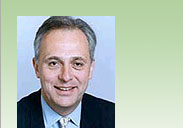 |
Mark Malloch Brown,
Chef de Cabinet, Office of the Secretary General to the United Nations
"By directly empowering poor people, particularly women,
microfinance has become one of the key driving mechanisms towards
meeting the MDG's, specifically the overarching target of halving
extreme poverty and hunger by 2015." |
 |
|